
Member Highlight: Taos Ski Valley
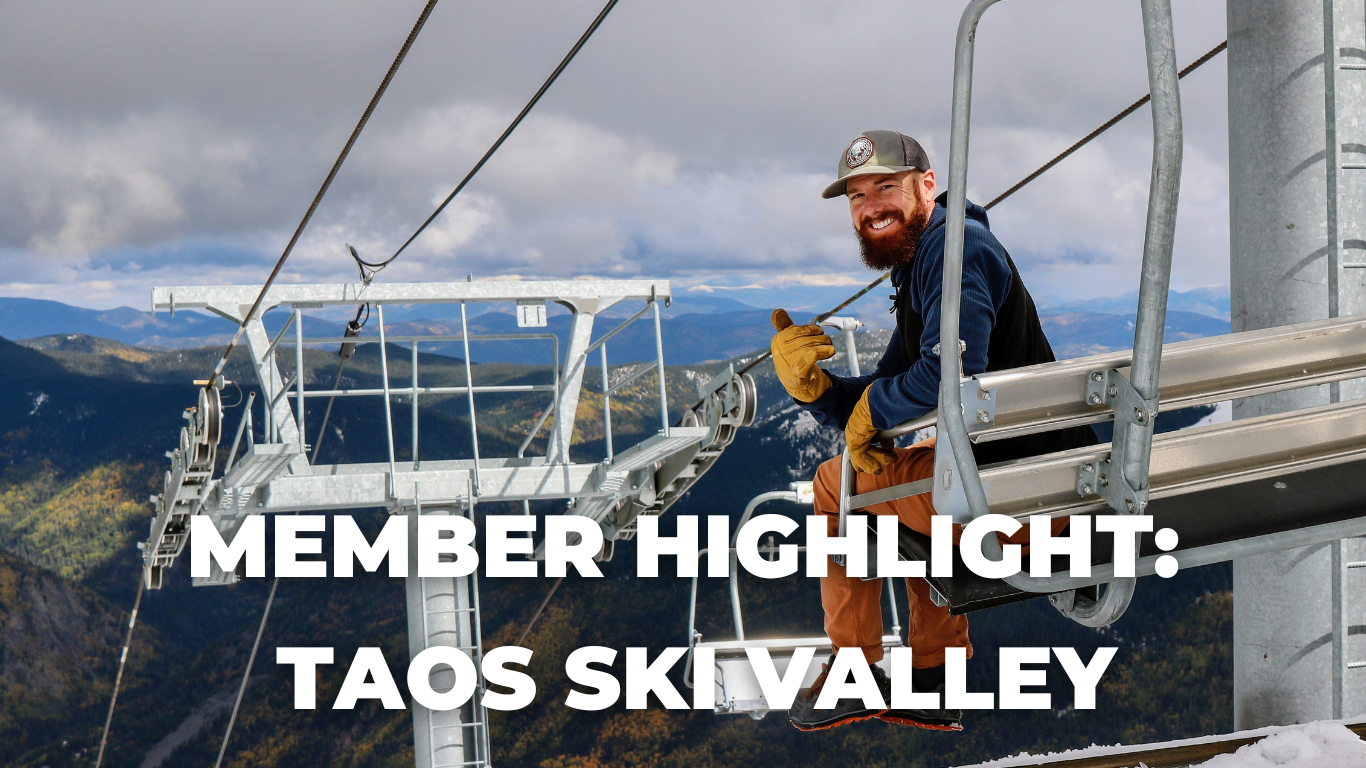
Kristopher Devogelaere, VP of Finance at Taos Ski Valley
From the Mountain to the Balance Sheet
How Taos Ski Valley Aligns Insurance, Risk, and Values
As a ski area and mountain-based business, Taos Ski Valley does not experience climate risk as an abstract concept. It shows up every season in operations, finances, and accountability to the mountain and the community around it. As the world’s first Certified B Corp ski resort and an early member of Premiums for the Planet, Taos has also been a leader in rethinking what insurance can do beyond simply transferring risk.
We spoke with Kristopher Devogelaere, VP of Finance at Taos Ski Valley, about why Taos chose to work with Premiums for the Planet, how his background in the ski industry shapes his approach to risk and finance, and what collective action on insurance can unlock for mountain communities. Kris has spent nearly 15 years working across ski towns in Colorado and New Mexico, bringing together operational fluency, financial discipline, and a deep respect for place.
Can you tell us a bit about your journey to Taos Ski Valley and what drew you to this industry?
I’ve been fortunate to work in the ski industry for nearly 15 years. I was initially drawn to the mountains, but what’s kept me here is the people. Ski resorts tend to attract people who are deeply passionate about their work and have a real zest for life.
After college, I started at a small ski area in Crested Butte, Colorado, and later moved to Steamboat Springs, where I spent several winters and met my wife. After five seasons in Steamboat, I began thinking more intentionally about the long-term direction of my career. Around that time, I revisited Let My People Go Surfing by Yvon Chouinard, which reshaped how I thought about the role businesses can play in their communities and the environment.
That led me to the B Corp movement and ultimately to Taos Ski Valley, the first Certified B Corp ski resort in the world, where I joined the team to oversee finance. The opportunity to align my professional skills with an organization’s mission made Taos a natural fit.
What motivates you personally to focus on sustainability and mission-driven business practices?
I’ve always enjoyed working with numbers, which naturally led me to finance, but I’ve also wanted my work to feel meaningful. As someone who spends a lot of time outdoors, I believe businesses, especially those tied to public lands and mountain communities, have a responsibility to think beyond short-term results.
At Taos Ski Valley, one of our core principles is expanding access to skiing and creating economic opportunities for youth and the broader Taos community. Some of the most rewarding days are arriving at the mountain and seeing hundreds of local kids participating in our school and local ski programs.
It’s a consistent reminder that the decisions we make have real, visible impact.
How has your background shaped the way you approach challenges at Taos Ski Valley?
Ski resorts are uniquely complex operations. They combine retail, food and beverage, equipment rentals, hospitality, and large-scale mountain operations, everything from lift maintenance and grooming to snow safety and avalanche mitigation.
Early in my career, I was fortunate to learn from mentors who helped me understand how these pieces fit together. That experience shapes how I approach challenges today by listening closely to operational leaders, maintaining a learning mindset, and focusing on solutions that work in the real world, not just on a spreadsheet.
The ski industry also attracts people who are comfortable operating in high-risk, high-variability environments. At Taos Ski Valley, we emphasize a strong culture of safety and work closely with partners to manage risk thoughtfully, reinforcing the importance of steady, measured decision-making.
Why did Taos Ski Valley choose to work with Premiums for the Planet?
At Taos Ski Valley, we were looking for a partner who could help us navigate an increasingly complex insurance market while aligning with our organizational values. Premiums for the Planet stood out for their ability to combine strong marketplace expertise with a clear commitment to environmental responsibility, allowing us to align a significant area of spend with our guiding principles.
What problem were you trying to solve with your insurance program?
Our existing programs had become stagnant while costs continued to rise. We were exploring options with a new insurance broker and needed guidance from a partner who understood the complexity of our operations and could help us evaluate the market more strategically.
Premiums for the Planet provided that support, connecting us with brokers who could meet our needs while helping us rethink how our insurance premiums could be leveraged for positive change. With Premiums for the Planet’s support, we successfully transitioned to a new broker and modified some of our existing insurance programs.They also conducted a baseline assessment of our existing coverage and served as a trusted sounding board throughout the process.
Their ongoing guidance helped ensure the transition was both efficient and well-informed.
What advice would you give peers in the mountain town or resort ecosystem?
Insurance challenges, particularly in wildfire-prone regions, are a reality for many mountain communities and ski resorts. Maintaining access to a competitive market with multiple options is critical.
Partnering with an organization that understands your business and shares your values can make a meaningful difference. Premiums for the Planet demonstrated a strong understanding of the unique risks facing mountain communities and took the time to learn our business structure. Beyond environmental impact, working with them simply made good business sense.
4. Mountain communities face real risks and uncertainty every season. How do you stay hopeful and focused in the midst of these challenges?
I stay hopeful by staying focused on our mission, particularly our commitment to local youth. Thinking about the next generation encourages long-term stewardship and more deliberate decision-making, even during uncertain seasons.
It helps shift attention away from factors we can’t control and toward the tangible impact we can make each day. That includes practical environmental initiatives like deploying on-mountain electric vehicles, investing in more efficient snowmaking, and practicing sustainable forestry.
Individually, these may seem incremental, but together they create meaningful, local impact.